
How Financing a Used Car Builds Your Credit Score in Merrillville

How Financing a Used Car Builds Your Credit Score in Merrillville
If you are working to rebuild your credit, it helps to know what an auto loan actually does to your score. The answers below come from our finance team at Shaver Preferred Motors. They cover what shoppers ask about most: payment history, credit mix, and how credit inquiries really work.
How does financing a used car help build your credit score in Merrillville?
Financing a pre-owned vehicle can open a structured path toward credit recovery. Most auto lenders report your payment activity to the major credit bureaus. When you take out the loan, it shows up as a new installment account on your credit profile. That addition diversifies your credit mix. It shows future lenders you can manage more than one kind of debt over time.
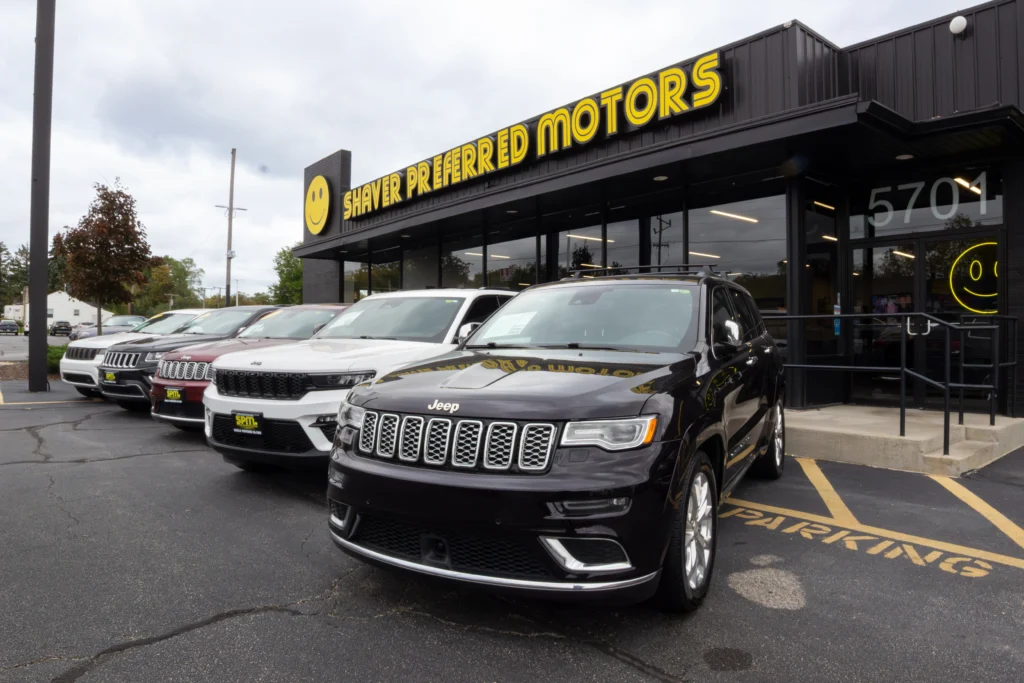
Merrillville commuters who drive Broadway every day know a reliable vehicle is not optional. It is how you get to work and keep the family moving. Buyers on our lot often ask how a pre-owned vehicle loan can help them rebuild after past financial trouble. It is a fair question, and it ties closely to how the bad credit auto loan approval process works. Choose a vehicle from our pre-owned selection and you can find something affordable that also establishes an active trade line.
Our team works to match you with a loan structure that fits your transportation needs and your credit-building goals. Have questions about how your credit profile will be reviewed? Call us at 219-235-8687 or stop by our showroom at 5701 Broadway to speak with a finance specialist.
Financing information here is general education. It is not an offer of credit or a guarantee of approval. Loan approval, interest rate, and terms are set by the lender and are subject to credit review and verification.
What is payment history and how much does it impact your credit score?
Payment history represents 35% of your FICO score, according to FICO’s published score breakdown. That makes it the single most influential factor in your creditworthiness. When a lender reviews your report, the main question is whether you paid past obligations on time. That record tells them how much risk they take on by lending to you.
What makes up a FICO score
| Factor | Share of score | What it looks at |
|---|---|---|
| Payment history | 35% | Whether you pay accounts on time |
| Amounts owed | 30% | How much you owe, including card utilization |
| Length of credit history | 15% | How long your accounts have been open |
| New credit | 10% | Recently opened accounts and hard inquiries |
| Credit mix | 10% | The variety of account types you manage |
Because payment history carries the most weight, a single payment that is 30 days late can meaningfully set back your progress. How much it costs you depends on the rest of your profile. That is why we push automatic payments or calendar reminders as soon as your loan is finalized. Steady on-time payments build a foundation that pays off for years.
Another way to keep payments manageable is to borrow less in the first place. Valuing your current vehicle before you shop shows how much equity you can put toward the purchase, and our guide to getting the most for your trade-in walks through the timing. A smaller loan balance means a smaller monthly payment and less total interest. To go deeper on setting a payment you can live with, see our budgeting guide for Merrillville drivers.
Credit scoring figures reflect FICO’s published general-population weightings. Scoring models vary by provider and version, and the effect of any single factor depends on your complete credit profile. Individual results will vary.
How long does it take for a used car loan to start improving your credit score?
Your new auto loan usually appears on your credit report within the first 30 to 60 days. Real upward movement in your score generally takes about 6 to 12 months of steady payments. Some borrowers notice gains sooner. That stretch of time is what lets scoring models recognize a stable, predictable pattern of borrowing.
In the first few months, you may actually see a small, temporary dip. The new account and the hard inquiry both cause it. This is normal and should not alarm you. As on-time payments stack up, the positive reporting offsets that dip and pushes your score back up.
If you are starting with a thin credit file or no credit history at all, this steady reporting is especially powerful. Our first-time buyer’s guide to financing a used car in Northwest Indiana covers what to expect. Six months of on-time payments shows all three major credit bureaus that you are a lower-risk borrower. Over time, that build-up of positive data becomes the foundation of a stronger credit profile.
Credit scoring figures reflect FICO’s published general-population weightings. Scoring models vary by provider and version, and the effect of any single factor depends on your complete credit profile. Individual results will vary.
Does paying off a car loan early help or hurt your credit score?
Many borrowers assume that killing debt fast is always the best move. Paying off an installment loan early can actually produce a small, temporary drop. Closing an active, positive account reduces your credit mix, which is 10% of your FICO score. It can also lower the average age of your active accounts.
While an auto loan is open and paid on time, it feeds positive data to the bureaus every month. Once it is paid off, the account goes inactive. It stays on your report as a closed account in good standing for up to ten years, but it no longer adds fresh month-by-month payment history. That shift in your active profile is what sometimes triggers a small dip.
Despite the short-term dip, paying off a loan early is often a sound move because it wipes out future interest. If you pay off your vehicle ahead of schedule, keep your other active accounts healthy. Credit cards with low balances help hold your utilization down. Weighing long-term interest savings against a temporary score dip is a personal call that depends on your own goals.
Credit scoring figures reflect FICO’s published general-population weightings. Scoring models vary by provider and version, and the effect of any single factor depends on your complete credit profile. Individual results will vary.
How does a hard inquiry from a car loan application affect your credit score?
Soft credit checks let you see preliminary rates with no scoring penalty. Formal applications go deeper. A hard credit check happens when a lender pulls your full credit report to make a final decision. The table below covers what that means in practice, based on FICO’s guidance on credit inquiries.
Hard inquiries at a glance
| What happens | How long or how much |
|---|---|
| Visible on your credit report | Up to 2 years |
| Counted by FICO Scores | First 12 months only |
| Typical score impact | Fewer than 5 points for most people; larger on a thin file |
| Auto-loan rate-shopping window | 14 to 45 days, counted as a single inquiry |
| Soft credit check | — No score impact |
Scoring systems are built to accommodate people who shop around for the best rate. Multiple hard inquiries for an auto loan inside that window count as one. You can compare terms from several lenders without stacking up the penalty.
To keep the impact small, do all your formal applications in a tight timeframe. Avoid applying for other kinds of credit during that same window, like retail store cards or new credit cards. Keeping applications concentrated lets you find the best rate while protecting your score.
Credit scoring figures reflect FICO’s published general-population weightings. Scoring models vary by provider and version, and the effect of any single factor depends on your complete credit profile. Individual results will vary.
How does auto loan pre-approval protect you during dealership negotiations?
Your credit profile is what determines the rate you are offered, so the work you put into it shows up here. Walking onto a lot with a pre-arranged offer changes the dynamic of the purchase. A pre-approval gives you a concrete rate and payment to measure every other offer against. Keep in mind that a pre-approval is a conditional commitment, not a guarantee, and final terms depend on the lender’s review.
What it gives you is leverage. As the Consumer Financial Protection Bureau notes, lenders and dealers are not generally required to offer you the best rate you qualify for. No dealership is obligated to beat an outside offer. You are never obligated to accept dealer-arranged financing that costs you more.
A pre-approval also shifts the conversation from monthly payment to the actual purchase price. That matters. It stops a seller from stretching the loan term to make an overpriced vehicle look affordable month to month. Knowing your budget and your maximum rate keeps you in control.
We are happy to talk through how a financing structure could work for your budget. Start the conversation with our team, or stop by the dealership to explore our inventory and discuss options in person.
Financing information here is general education. It is not an offer of credit or a guarantee of approval. Loan approval, interest rate, and terms are set by the lender and are subject to credit review and verification.
Disclaimers
Credit scoring figures reflect FICO’s published general-population weightings. Scoring models vary by provider and version, and the effect of any single factor depends on your complete credit profile. Individual results will vary.
Financing information here is general education. It is not an offer of credit or a guarantee of approval. Loan approval, interest rate, and terms are set by the lender and are subject to credit review and verification.
This article is provided for general educational purposes only and does not constitute financial, credit, or legal advice. Consult a qualified financial professional regarding your individual situation.
Financiamiento de Autos con Mal Crédito en Merrillville, Indiana
Ver Inventario Contáctenos ¿Qué puntaje de crédito se considera “mal crédito” para financiar un auto? Una puntuación FICO inferior a…
Cómo comprar un auto después de una bancarrota en Indiana sin cometer errores comunes
ContáctenosVer Inventario de Vehículos Usados Volver a tener transporte propio después de una quiebra es completamente posible. Lo que cambia…
How to Get a Car Loan After Bankruptcy in Indiana
Contact UsBrowse Used Inventory Rebuilding financial stability after a major setback takes clear, practical steps — and for most Northwest…