
How to Get a Car Loan After Bankruptcy in Indiana
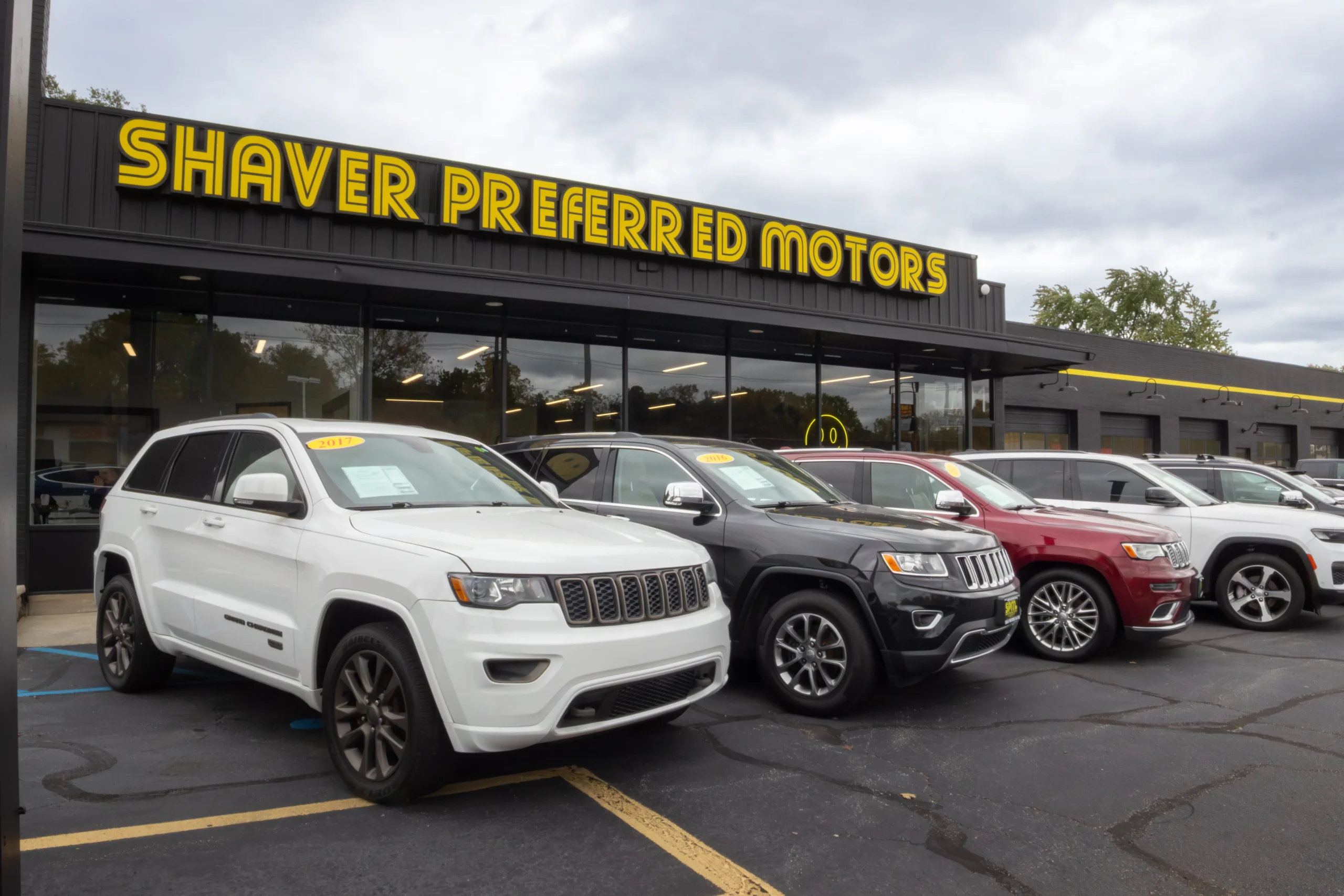
Rebuilding financial stability after a major setback takes clear, practical steps — and for most Northwest Indiana households, reliable transportation is one of the first. Merrillville drivers commuting along Broadway need a dependable vehicle to keep work schedules and family commitments intact.
Here is the part that surprises most people. No federal or Indiana law imposes a waiting period after a Chapter 7 or Chapter 13 discharge. You can apply for an auto loan right away. Lenders set their own timelines, but the law does not make you wait.
Approval comes down to demonstrating a stable recovery, not running out a clock. Lenders who work in this space look at your income, your down payment, and your paperwork far more closely than they look at the bankruptcy itself.
At Shaver Preferred Motors, our finance team works with a network of banks, credit unions, and other lending institutions to find financing that fits your situation. You can start the pre-approval process by submitting our online credit application. For questions about the documentation your application will need, call us at 219-235-8687.
What Subprime Lenders Require
Requirements vary by lender, but most subprime programs share the same baseline. Gathering these before you apply speeds the process considerably.
|
Requirement |
Typical Standard |
|---|---|
|
Gross monthly income |
$1,500 to $2,500 from a single source |
|
Income verification |
Recent computer-generated pay stubs showing year-to-date income |
|
Down payment |
$1,000 or 10% of the selling price, whichever is greater |
|
Proof of residency |
A recent utility bill or bank statement |
|
Identification |
Valid driver’s license |
|
Personal references |
Five to eight, with full contact information |
|
Discharge paperwork |
Your official discharge order, useful if credit reports have not updated yet |
Post-Bankruptcy Auto Loan Rates in Indiana: What to Expect
Post-bankruptcy auto loans are typically priced as subprime credit, because the lender is pricing for elevated risk. That means rates well above the market average — but not permanently.
Experian’s State of the Automotive Finance Market report for the first quarter of 2026 shows how sharply rates separate by credit tier:
|
Credit Tier (VantageScore 4.0) |
New Car APR |
Used Car APR |
|---|---|---|
|
Subprime (501–600) |
13.44% |
19.42% |
|
Deep subprime (300–500) |
16.01% |
21.77% |
For context, the overall average across all credit profiles in Q1 2026 was 6.39% APR for new vehicles and 11.43% for used. Your actual rate depends on the timing of your discharge, your current credit profile, your down payment, and the vehicle itself.
Financing a reliable pre-owned vehicle is one of the most effective ways to establish a fresh record of on-time payments. Shoppers rebuilding credit often find the strongest value among used vehicles under $15,000. A smaller amount financed keeps total interest cost manageable, even at a subprime rate.
Financing is subject to credit approval. Annual Percentage Rate (APR), loan term, monthly payment, and down payment requirements vary based on creditworthiness, the lender, the vehicle, and the amount financed. The figures cited above are general industry guidelines provided for educational and comparison purposes only — they are not an offer or guarantee of credit, financing terms, or a specific rate.
Chapter 7 vs. Chapter 13: Different Rules for a New Car Loan
Chapter 7 and Chapter 13 operate under entirely different rules for taking on new debt, and knowing which set applies to you determines your next move.
|
|
Chapter 7 |
Chapter 13 |
|---|---|---|
|
Structure |
Liquidation |
3-to-5-year repayment plan |
|
Discharge timeline |
Typically 4–6 months from filing |
After all plan payments are completed |
|
Financing during the case |
Most lenders wait for discharge; some consider applications once the meeting of creditors is complete |
Permitted, but requires approval |
|
Court involvement |
None required after discharge |
Formal motion to incur debt, approved by the trustee or the court |
The Eight-Year Rule, Explained Correctly
Under Chapter 7, one detail is commonly misstated and worth getting right: federal law does not prevent you from filing another Chapter 7 within eight years. What Section 727(a)(8) actually bars is a second discharge — measured from the filing date of your prior case to the filing date of the new one, not from the date your discharge was entered. Lenders tend to view discharged Chapter 7 borrowers favorably in part because that bar limits how quickly a new loan could be wiped out.
Getting Approval During Chapter 13
Under Chapter 13, you can finance a vehicle during the active repayment period, but you must obtain approval before signing anything. Depending on the district, that means written approval from your trustee, a formal motion to incur debt filed with the bankruptcy court, or both. Your request will need to state the proposed loan amount, interest rate, monthly payment, and term. Trustees commonly set limits on those figures to protect plan feasibility. Signing before you have approval can put your entire case at risk.
Trade-in equity helps on both paths by reducing the amount you need to finance. You can estimate your trade-in value online before you apply.
Down Payment Requirements and Rebuilding Your Credit Score
How Much You Will Need Down
The most effective way to offset a lender’s risk is a substantial down payment. Subprime programs generally require $1,000 or 10% of the vehicle’s selling price, whichever is greater. Expect that to run higher if your discharge is very recent. Trade-in equity can count toward it. A larger down payment improves the loan-to-value ratio on the transaction, which often translates into a lower rate and better terms.
How an Auto Loan Rebuilds Your Score
An auto loan is also one of the most powerful tools available for rebuilding a damaged score. FICO calculates its scores from five categories, weighted as follows across the general population:
-
Payment history — 35%
-
Amounts owed — 30%
-
Length of credit history — 15%
-
Credit mix — 10%
-
New credit — 10%
Because payment history carries the most weight, consistent on-time auto loan payments move the needle faster than almost anything else. Most borrowers see a noticeable upward trend after six to twelve months of consecutive on-time payments.
Note: Experian’s rate tiers above use VantageScore 4.0, while the weightings here describe FICO. The two models score differently, and the score your lender pulls may not match the one in your banking app.
Financing is subject to credit approval. Annual Percentage Rate (APR), loan term, monthly payment, and down payment requirements vary based on creditworthiness, the lender, the vehicle, and the amount financed.
Credit Unions vs. Dealership Special Financing
Where you apply determines the underwriting standards you’ll face. Traditional banks and credit unions often apply stricter credit policies. Some decline applicants with a recent bankruptcy on file. Still, if you already hold a checking or savings account somewhere, that relationship is worth a conversation.
Dealership special financing departments work through a broader network of subprime lenders. These lenders look past the filing itself to evaluate current income stability, debt-to-income ratio, and employment history. Working with multiple lenders lets a dealership compare programs and pursue the most competitive terms available for your specific situation.
Want to know what your application looks like from the lender’s side? Our guide to the bad credit auto loan approval process covers credit tiers, required documents, and how underwriters read a file.
Common Questions About Rebuilding Credit With an Auto Loan
How long does it take for a bankruptcy discharge to show up on a credit report?
A discharge is typically reflected on credit reports within 30 to 60 days of the court issuing the final order. Review your files with all three bureaus before applying to confirm the status is reported accurately — and keep a copy of your discharge paperwork, since lenders will often accept it directly if the report hasn’t caught up yet.
Can a co-signer lower the interest rate on a post-bankruptcy car loan?
Yes. A co-signer with established, good credit reduces the lender’s risk by accepting responsibility if the primary borrower defaults. The Consumer Financial Protection Bureau notes that a co-signer with good or excellent credit could make your interest rate significantly lower. Make sure any co-signer understands that the loan appears on their credit report too.
When does refinancing an auto loan after bankruptcy make sense?
Refinancing becomes realistic once your credit profile has genuinely improved — and most borrowers see that improvement after six to twelve months of consecutive on-time payments. At that point, replacing a high-rate subprime loan with better terms becomes a practical option worth pricing out.
What documents should I bring to the dealership?
Bring your official bankruptcy discharge papers, a recent utility bill or bank statement to establish residency, and your most recent computer-generated pay stubs showing year-to-date income. A valid driver’s license is required, and most subprime lenders also ask for a list of five to eight personal references with full contact information.
Does applying with multiple lenders damage my credit score?
Not if you group your applications. The CFPB notes that shopping for the best deal generally has little to no impact on your credit scores, and that the benefit of shopping far outweighs any impact. Scoring models treat multiple auto loan inquiries within a short window as a single inquiry — 14 days under VantageScore 4.0 and older FICO versions, extended to 45 days under newer FICO versions. Newer FICO models also disregard auto inquiries less than 30 days old entirely. Keeping your shopping inside a two-week window is the safest approach regardless of which model your lender uses.
Start Your Fresh Start at Shaver Preferred Motors
A reliable vehicle is often the first real step out of a financial setback. At Shaver Preferred Motors, we don’t believe a past bankruptcy should keep you from driving something safe and dependable. Our finance team will walk the process with you directly, and without judgment.
Visit us at 5701 Broadway in Merrillville to look at inventory and talk through your options in person, or call 219-235-8687 to reach our team about pre-approval requirements. If you want to get a head start on your budget before you shop, our budgeting guide for Merrillville drivers walks through sizing a payment you can live with.
Disclaimers
Financing is subject to credit approval. Annual Percentage Rate (APR), loan term, monthly payment, and down payment requirements vary based on creditworthiness, the lender, the vehicle, and the amount financed. The figures cited above are general industry guidelines provided for educational and comparison purposes only — they are not an offer or guarantee of credit, financing terms, or a specific rate. Your actual terms will be disclosed in your financing agreement. This information is provided for general educational purposes only and does not constitute financial, legal, or tax advice.
Interest rate data: Experian, State of the Automotive Finance Market, Q1 2026.
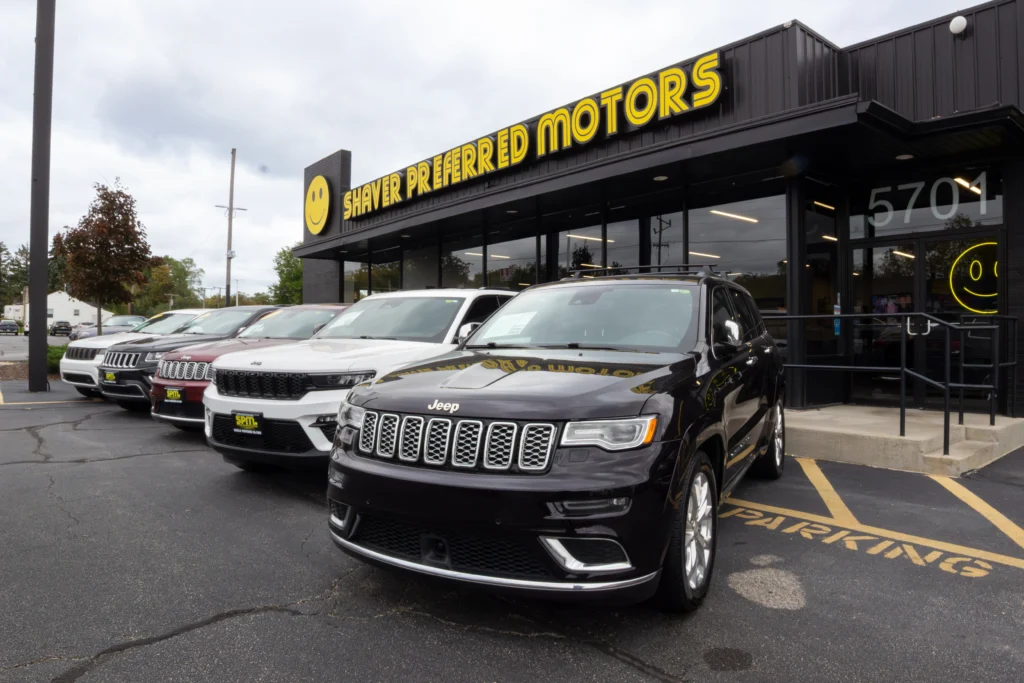
Financiamiento de Autos con Mal Crédito en Merrillville, Indiana
Ver Inventario Contáctenos ¿Qué puntaje de crédito se considera “mal crédito” para financiar un auto? Una puntuación FICO inferior a…
Cómo comprar un auto después de una bancarrota en Indiana sin cometer errores comunes
ContáctenosVer Inventario de Vehículos Usados Volver a tener transporte propio después de una quiebra es completamente posible. Lo que cambia…
Bankruptcy Auto Financing in Merrillville: Your Questions Answered
Rebuilding after a bankruptcy filing is hard enough without losing access to reliable transportation. If you need a vehicle during…