
First-Time Buyer’s Guide to Financing a Used Car in Northwest Indiana
Buying your first car is a milestone — and for many Northwest Indiana residents, it also means navigating auto financing for the first time. Whether you’re a recent graduate in Merrillville, a young professional commuting to Chicago, or someone building credit from scratch in Gary, Crown Point, or Valparaiso, understanding how used car financing works can save you real money and a lot of stress. This guide breaks down what first-time buyers actually need to know: how lenders evaluate applicants without a long credit history, which documents to bring, whether to finance at a dealership or a bank, and how a well-managed auto loan can become the foundation of the credit history you’ll lean on for years.
How Lenders Evaluate First-Time Buyers Without a Credit History
Many first-time buyers — students, recent graduates, new arrivals to the U.S., or anyone who simply hasn’t opened credit accounts yet — worry that a thin credit file will lock them out of financing. It won’t. When applicants don’t have a long credit history, lenders shift focus to alternative indicators of financial responsibility. A steady paycheck and reliable bill-paying habits speak almost as loudly as a credit score.
What lenders look at when credit history is limited:
| Indicator | Why It Matters to Lenders |
|---|---|
| Income Stability | Consistent earnings show you can absorb a fixed monthly payment. Steady income often matters more than total income. |
| Length of Employment | Time at your current job — or in a single field — signals reliability. Job-hopping isn’t a deal-breaker, but tenure helps. |
| Bank Statement Activity | Regular deposits and a positive average balance show you’re managing money responsibly, even without credit accounts. |
| Rent & Utility Payment History | On-time rent and utility payments demonstrate the same habit lenders care about most — paying what you owe, when you owe it. |
At Shaver Preferred Motors in Merrillville, the Finance & Insurance (F&I) Department works with a network of lenders who specialize in first-time buyers and applicants building credit from scratch. That lender diversity matters — instead of being tied to a single bank’s underwriting rules, your application gets matched with the lender most willing to approve your specific profile.
Two other tools can materially improve your approval odds and your terms:
| Approval Tool | How It Helps | The Trade-Off |
|---|---|---|
| Adding a Co-Signer | Someone with established credit (often a parent or close family member) shares responsibility for the loan, reducing the lender’s risk and unlocking approvals that wouldn’t happen otherwise. | Missed payments damage the co-signer’s credit too. Treat the decision carefully. |
| A Larger Down Payment | Putting 10–20% down (or more) signals commitment, lowers the amount financed, and often unlocks a better interest rate. | Requires upfront cash — but it’s one of the most effective ways to offset higher first-time-buyer rates. |
For a closer look at how the financing process works at Shaver, visit our financing options page.
How Financing a Used Car Can Build Your Credit Score
For many first-time buyers, the real long-term value of an auto loan isn’t just the car — it’s the credit history you build along the way. Every on-time payment gets reported to the major credit bureaus, and an auto loan touches three of the five factors that make up your FICO score.
| FICO Factor | % of Score | How an Auto Loan Helps |
|---|---|---|
| Payment History | ~35% | The single biggest factor. Every on-time auto payment reports to all three bureaus. |
| Length of Credit History | ~15% | Starts the clock on your long-term track record. Longer is better, so starting now pays off later. |
| Credit Mix | ~10% | Adds installment credit alongside any revolving credit (like a credit card) — lenders like to see both. |
The flip side is that missed or late payments can damage your score quickly — and the same reporting that helps you also hurts you when you slip. For first-time buyers, the right move is choosing a payment you can comfortably manage, not the largest loan you’re technically approved for.
💡 Bottom Line
A modest, well-managed auto loan is one of the most reliable credit-building tools available. Pick a payment you’d be comfortable making even in a slow month — that’s how you build a score, not just borrow money.
Documents You’ll Need to Apply for a Used Car Loan
Arriving prepared speeds up approval and gets you on the road faster. Most lenders — including those in Shaver’s network — will ask for the following:
| Document | What Counts |
|---|---|
| Government-Issued Photo ID | Driver’s license, state ID, or passport |
| Proof of Income | Recent pay stubs, last year’s tax returns, or bank statements showing consistent deposits. Self-employed buyers may need profit and loss statements or 1099 forms. |
| Proof of Residency | Recent utility bill, lease agreement, or mortgage statement showing your current Northwest Indiana address |
| SSN or ITIN | Social Security number or Individual Taxpayer Identification Number. Many lenders accept ITINs, which matters for applicants who haven’t yet been issued an SSN. |
| Proof of Auto Insurance | Typically required before delivery. Shaver’s team can walk you through this if you don’t have a policy yet. |
If a co-signer is part of your application, they’ll need to provide the same documentation. Having everything ready at the start of the conversation — rather than scrambling mid-approval — can be the difference between driving home the same day and waiting days for paperwork.
Already have a vehicle? You can get a head start on your down payment by checking what it’s worth with our trade-in valuation tool.
Financing at a Dealership vs. a Bank: Which Is Better for First-Time Buyers?
Where you finance matters almost as much as what you finance. Here’s how the two main paths compare side by side for buyers without a long credit history.
| What to Compare | Dealership Financing | Bank Financing |
|---|---|---|
| Approval odds for first-time buyers | Higher — one application is shopped across multiple lenders | Lower — typically requires established credit |
| Speed of decision | Often same day | Days to a week |
| Interest rates | Varies by lender match | Generally lower — but only with strong credit |
| Convenience | Vehicle, loan, trade-in, paperwork all in one place | Separate process from the car purchase |
| Pre-shopping use | Happens after you select the vehicle | Pre-approval gives you a target rate to compare against |
| Add-ons (warranty, GAP, maintenance) | Can be bundled into financing — evaluate each one carefully | Not offered — handled separately if at all |
📋 The Practical Path
Start with the dealership’s F&I team to see what’s achievable across multiple lenders, then compare against any bank pre-approval you might qualify for. You keep the benefit of shopping multiple lenders without losing the speed of in-dealership financing.
Why First-Time Buyers Trust Shaver Preferred Motors
Shaver Preferred Motors has served Northwest Indiana for over 27 years and works with first-time buyers every week — across Merrillville, Crown Point, Valparaiso, Gary, Hammond, Schererville, and Chicago.
| What Sets Us Apart | Why It Matters for First-Time Buyers |
|---|---|
| 27+ Years in Northwest Indiana | A long track record serving local drivers from one Merrillville location. |
| A+ BBB Accreditation | Better Business Bureau accreditation backed by years of customer transactions. |
| Multi-Lender F&I Network | A lender network built specifically for first-time buyers and credit-building applicants. |
Ready to Take the Next Step?
Apply online in a few minutes, browse our used inventory, or call our finance team directly.
Shaver Preferred Motors · 5701 Broadway, Merrillville, IN 46410
¿Se puede cambiar un auto que todavía tiene un préstamo?
Sí, se puede. Entregar un auto como parte del pago mientras aún debe dinero de su financiamiento es una operación…
Budgeting Guide for Merrillville Drivers
Getting approved is only half the equation — the other half is choosing a payment you can live with month…
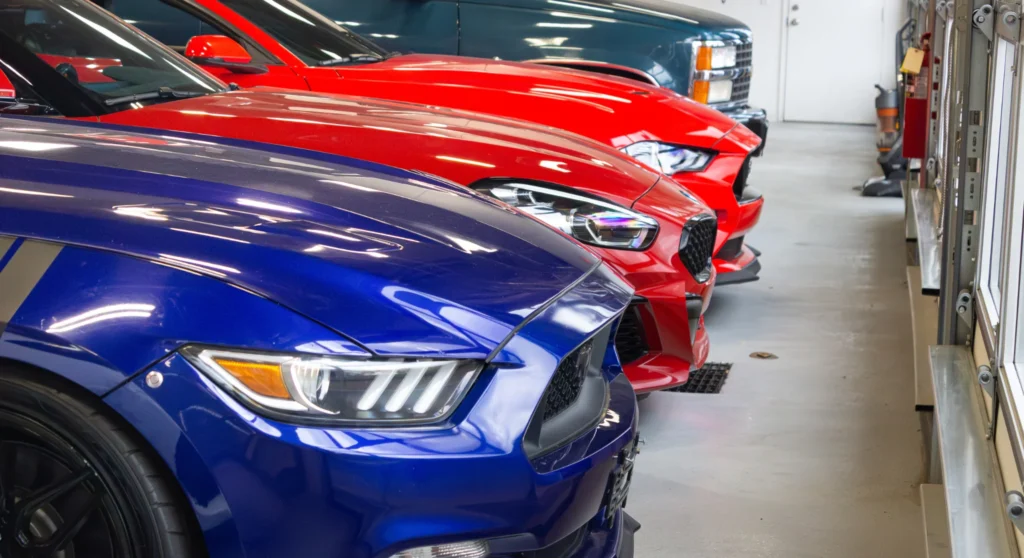
affordable used cars for sale near me
Used Cars for Every Budget in Merrillville Contact Us Browse Used Inventory Shopping for a dependable used car on a…